Growth monitoring
Growth monitoring is a central component of pediatric well visits in CareFlow Kids.
The application analyzes the patient's recorded measurements and compares them with WHO growth reference standards to evaluate whether growth follows an expected trajectory.
Source of growth data
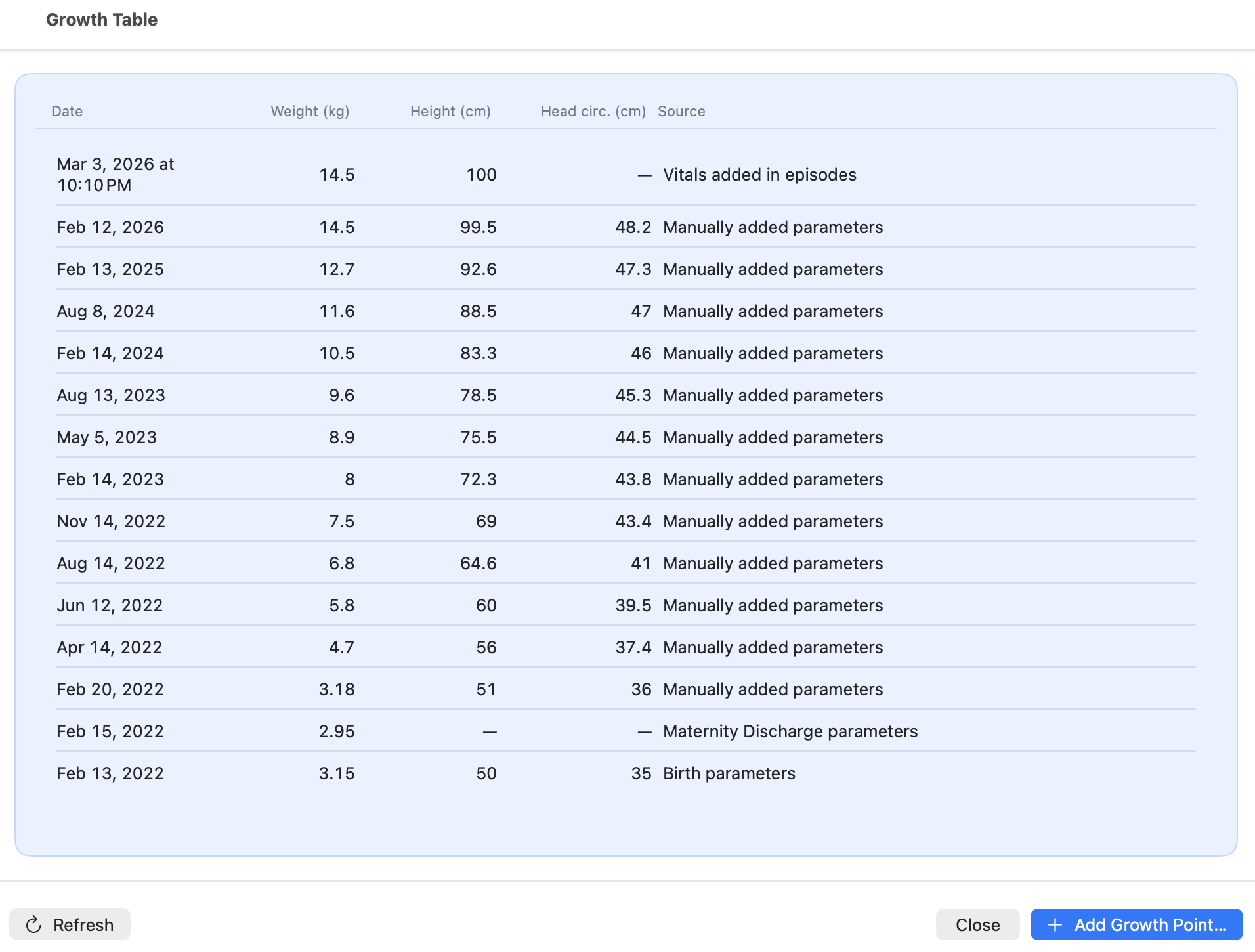
Growth analysis uses the measurements stored in the Growth Table.
These measurements can originate from:
- manual entries in the Growth Table
- measurements recorded during sick visits (vitals)
- measurements collected during well visits
All measurements are consolidated in the Growth Table to maintain a single chronological growth history for the patient.
Measurements used for analysis
Growth monitoring uses the following parameters when available:
- Weight
- Height / Length
- Head circumference
Depending on the patient's age, the system may also evaluate:
- Weight-for-length
- BMI
These measurements are compared against WHO pediatric reference curves.
Growth charts and percentiles
CareFlow Kids calculates:
- percentile position
- z-scores
These indicators allow clinicians to evaluate whether the patient's growth remains within expected limits.
The charts visualize:
- growth trajectory over time
- comparison with WHO reference curves
Short-term growth evaluation
In early infancy, growth monitoring focuses particularly on short-term weight gain.
The system may evaluate:
- recent weight gain
- weight gain velocity
This helps identify situations such as:
- insufficient weight gain
- feeding difficulties
- early nutritional concerns
Long-term growth evaluation
As the child grows older, the evaluation increasingly focuses on long-term growth trajectory.
Clinicians review:
- weight trajectory
- height trajectory
- proportional growth patterns
This helps detect:
- growth faltering
- disproportionate growth
- possible endocrine or nutritional problems
Integration with the well visit
When a well visit is opened, CareFlow Kids retrieves the available growth data from the Growth Table.
The visit can then display:
- growth chart position
- recent growth evolution
- trend interpretation
For this reason, clinicians are encouraged to enter the most recent measurements before opening the visit.
Clinical interpretation
Growth indicators and charts are intended to support clinical judgment.
They should always be interpreted in the broader clinical context, including:
- feeding history
- developmental progress
- family growth patterns