Milestone assessment
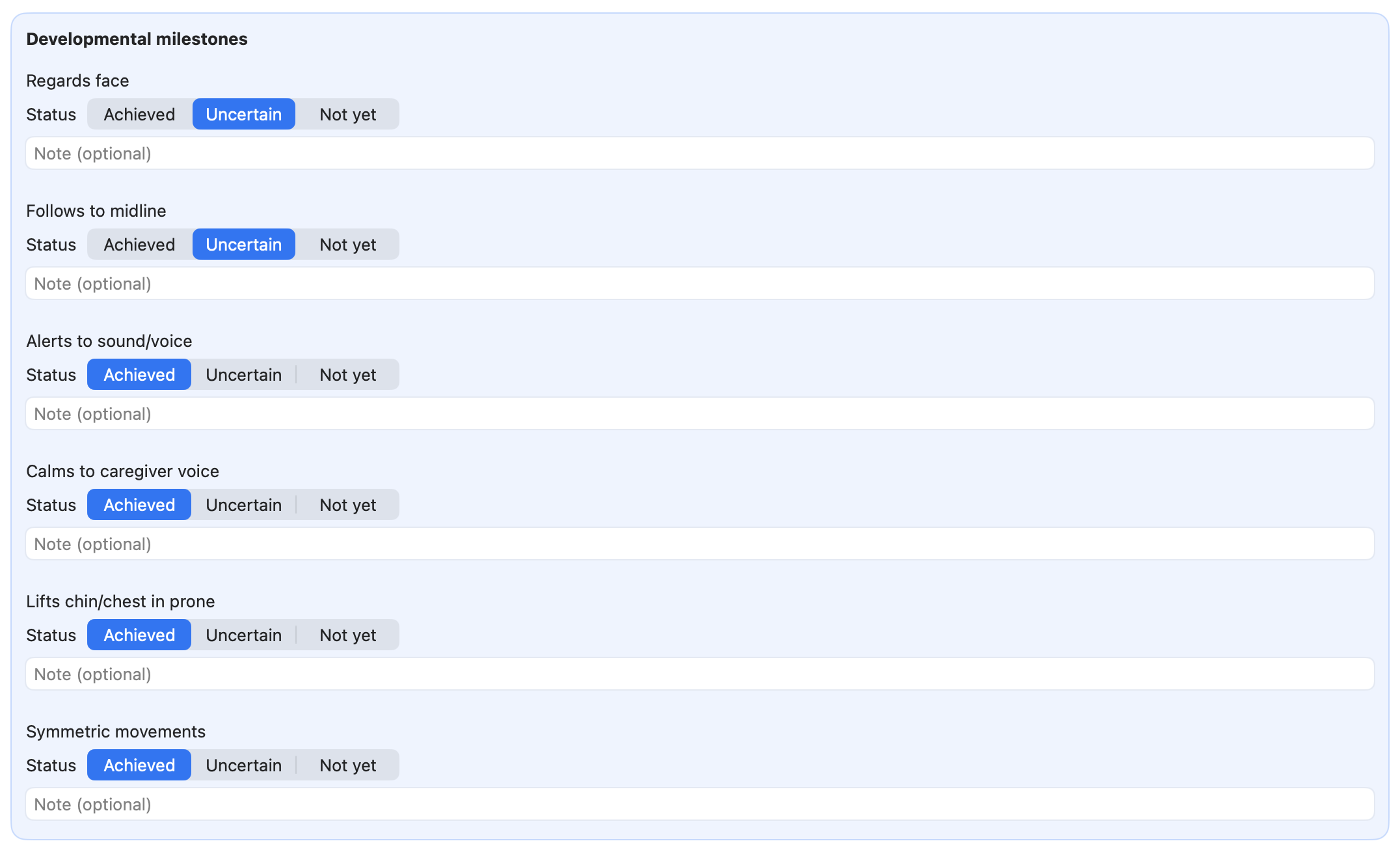
Developmental milestone assessment is a core component of pediatric well visits in CareFlow Kids.
The milestone section helps clinicians document the child's developmental progress across key domains and identify possible areas requiring closer follow‑up.
Age‑specific milestone sets
CareFlow Kids organizes milestones according to the age of the well visit.
Each visit type (for example: newborn visit, 1‑month visit, 2‑month visit, etc.) presents milestone items that are relevant for that stage of development.
This age‑structured approach helps clinicians focus on the developmental abilities that are expected or emerging at that age.
Examples include:
- early visits: basic reflexes, alertness, early interaction
- infancy: motor development, social smiling, vocalization
- later infancy: sitting, crawling, interaction, language emergence
- toddler years: walking, speech development, social behaviors
Optional notes may also be recorded to document observations or parental concerns.
Recording milestones
For each milestone item, the clinician can indicate whether the behavior is:
- Achieved
- Not yet observed
- Uncertain / requires follow‑up (when applicable)
Neurodevelopmental screening (M-CHAT)
At the relevant ages, the well visit can also record a neurodevelopmental screening result such as M-CHAT.
This allows the clinician to document:
- the M-CHAT score
- the corresponding risk category
- any additional developmental screening score when used
This screening information becomes part of the structured preventive record and can support:
- developmental surveillance
- follow-up planning
- referral decisions when needed
Purpose of milestone tracking
Documenting milestones allows the clinician to:
- follow developmental progress over time
- identify potential developmental delays
- document parental observations
- support early referral when needed
Because each well visit becomes part of the patient's longitudinal record, milestone documentation allows clinicians to review developmental progression across multiple visits.
Integration with the well visit summary
The milestone assessment contributes to the preventive evaluation recorded in the well visit.
Items that are not achieved or that raise concern may be highlighted in the clinician's conclusions and guidance section.
This allows the visit report to clearly document:
- developmental strengths
- areas requiring monitoring
- recommendations for follow‑up
Clinical interpretation
Milestone assessment supports clinical evaluation but should always be interpreted in context.
Relevant considerations include:
- variation in normal developmental timing
- prematurity when applicable
- family observations
- environmental context
The milestone section therefore serves as a structured support for developmental surveillance, not as a standalone diagnostic tool.